VIGIgym Review: The Workout Tracker Built by a Lifter, for Lifters Who Just Want to Train
Most fitness apps have become social networks with a workout log bolted on. VIGIgym bets the opposite: a native iOS and Apple Watch training journal built by a solo developer with 30+ years of lifting experience, stripped of feeds, AI coaches, and gamification — leaving a focused tool. Modular set-type support (supersets, giant sets, drop sets), 242 exercises with visual muscle mapping, a 1RM calculator, and precision sliders designed for one-handed glove-friendly gym use. For self-guided lifters who want a private, offline-first companion that respects both their data and their focus, it's a rare thing in a bloated category.
LaunchBuff Editorial
Reviewing Vigigym - Workout Tracker · Published August 28, 2026 · 7 min read
Key takeaways
- 1.Built by Achim Loobes — a solo developer with 30+ years of lifting experience — every UX decision reflects gym realities like gloved hands, moisture, and one-handed operation rather than product roadmap checkbox thinking
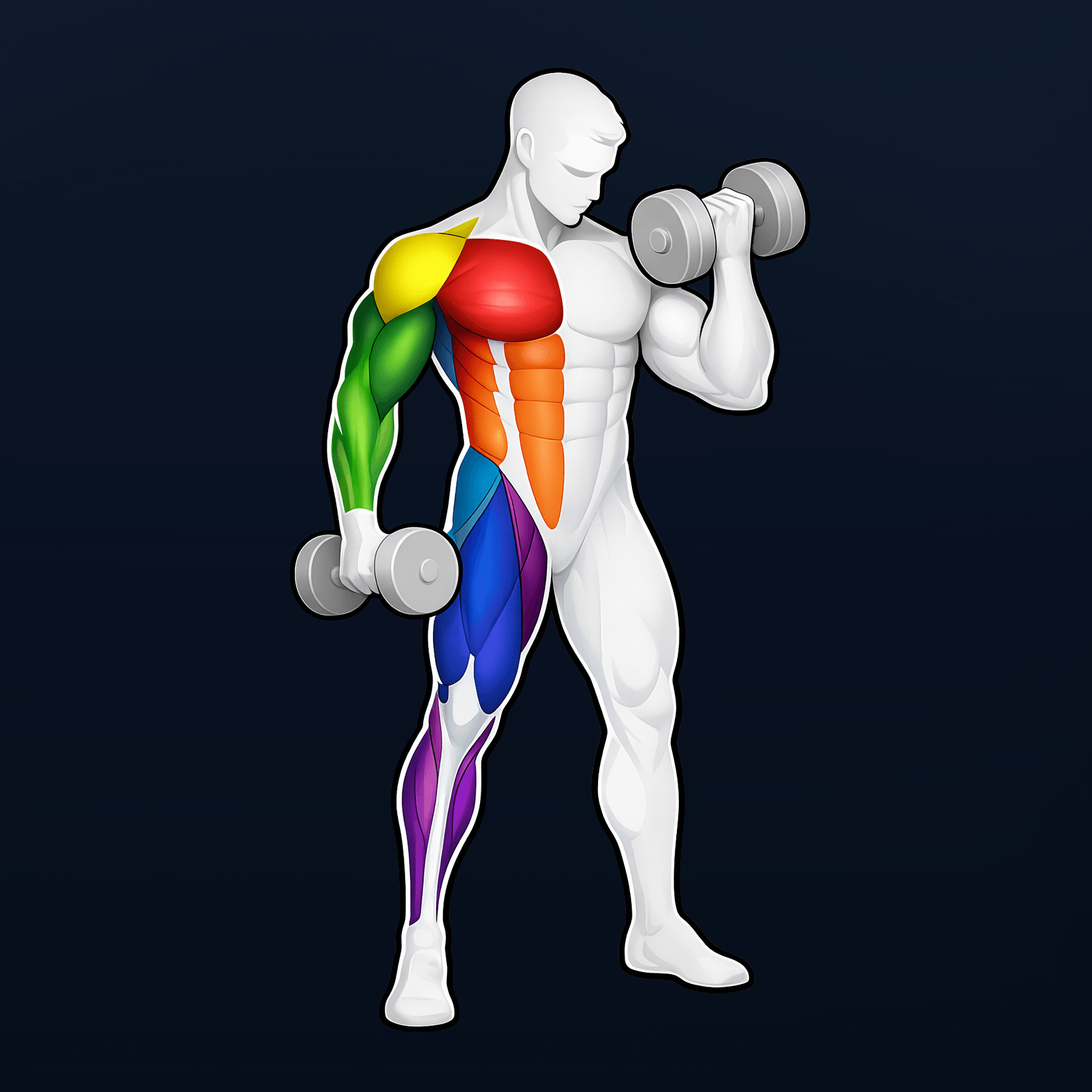
- 2.Full workout support: straight sets, supersets, giant sets, and drop sets in a modular builder; 242 exercises with color-coded anatomical muscle mapping so muscle-group targeting is visually clear
- 3.Privacy-first by architecture, not just policy: workout data stored locally on-device by default, iCloud sync is off and requires explicit opt-in, no account required — the developer has no access to your training data
- 4.Lifetime plan at $34.99 eliminates recurring billing entirely; a 7-day full-feature trial is available to test every premium feature before committing
- 5.Apple Watch app with heart rate monitoring, Live Activities lock-screen rest timer, and Apple Health integration — full native Apple ecosystem support built in SwiftUI
Built for Lifting. Not for Scrolling.: What VIGIgym Actually Is
The fitness app category has a bloat problem. Apps that started as training logs now ship motivational quote feeds, AI-generated periodization plans, leaderboards, gamified streak mechanics, and algorithmic content nobody asked for. The result is apps that are technically about fitness but functionally about engagement. VIGIgym takes the opposite bet. Achim Loobes — who started programming on a Commodore 64 in 1982 and has over 30 years of personal lifting experience — built an app around a single premise: a serious lifter needs a fast, reliable training journal that records what happened in the gym and lets them analyze it later. Nothing more is served by the app. No social layer exists to check. No AI coach interrupts the session. No gamification competes for attention with the workout itself. The result is an app that behaves like a well-built professional tool: native SwiftUI (no web wrapper), offline-first by default, and designed around the physical reality of gym use — precision sliders instead of text input, glove-friendly one-handed controls, and a rest timer accessible from the lock screen via Live Activities. It's not trying to be the only fitness app on your phone. It's trying to be the best training journal.
Routine Builder to Rest Timer: How a Workout Actually Flows
The core workflow starts in the routine builder. VIGIgym supports straight sets, supersets, giant sets, and drop sets — not as edge cases, but as first-class building blocks in a modular system. A bodybuilder running a push day can build a chest-and-triceps superset, then add a drop-set finisher for lateral raises — all in a few taps, no buried settings. The 242-exercise library covers the full compound-to-isolation spectrum, each entry tagged with color-coded anatomical muscle group data so exercise selection is visually clear. During a session, weight and reps log through precision sliders — no keyboard appears, no text field requires tapping. One-handed thumb navigation means gloves or chalk-covered hands don't slow you down. The Apple Watch app mirrors this experience at the wrist with heart rate monitoring active alongside rep logging. The rest timer runs as a Live Activity on the iPhone lock screen, surfacing the countdown without requiring an unlock between sets. After the session, VIGIgym's analytics surface what happened: weekly, monthly, and yearly volume charts, a streak calendar for consistency tracking, and automatic 1RM calculations that estimate optimal training weights for hypertrophy, strength, or endurance goals. Progress is visible across multiple time horizons without navigating to a separate analytics section — the dashboard connects the training log to the trends directly.
Privacy by Architecture, Not Policy: How VIGIgym Handles Your Training Data
Most fitness apps treat workout data as a product: it feeds recommendation engines, leaderboards, and in some cases advertising. VIGIgym's data model works differently at the structural level. All workout data is stored locally on the iPhone by default. iCloud sync is available but ships turned off — enabling it requires an explicit Settings action by the user. When enabled, data syncs to the user's own private iCloud account via CloudKit; the developer has no access. Heart rate data captured through Apple Watch never syncs to iCloud at all. There's no required account creation to use the app. The analytics layer — TelemetryDeck — is EU-hosted (Germany and Netherlands), does not use IP tracking, and is limited to anonymous usage signals: app version, device model, crash-free signals. The app does not integrate with advertising networks or social tracking infrastructure. For lifters who've noticed that free fitness apps tend to monetize attention or data in exchange for the free tier, VIGIgym's model is a structural answer: it charges directly for the product and doesn't need your training history as a secondary revenue stream. Equally relevant for the lifetime plan buyer: because data lives locally on-device, the app's value doesn't depend on any server infrastructure — your training history is yours regardless of what happens to the developer's operations.
The $34.99 Lifetime Plan: What It Is and Why It Changes the Value Calculation
VIGIgym offers three pricing options: a free tier, a $2.99/month subscription with a 7-day trial, and a one-time $34.99 lifetime plan. The free tier gives access to the full exercise library, the Apple Watch app, and muscle mapping — but limits each routine to 2 logged training sessions before the paywall activates. For a structured lifter running a weekly program, this constraint surfaces quickly; the free tier works as a genuine evaluation window rather than a sustainable long-term option. The $2.99/month monthly subscription unlocks unlimited training logs and all premium features. For context, comparable iOS training trackers in the category typically run $10–$15 per month — VIGIgym's monthly option is already near the floor of the market. The lifetime plan at $34.99 reframes the calculation entirely. For a lifter who plans to track training seriously for more than 12 months — nearly everyone in the target audience — a one-time $34.99 beats 12 months of any subscription alternative. It eliminates billing management, removes the annual renewal decision, and removes the cost-per-session mental overhead that creeps into subscription apps over time. No competing feature or pricing argument changes the math: $34.99 once versus recurring costs elsewhere.
Who VIGIgym Fits — and Where It Has Limits
VIGIgym is built for a specific type of lifter: self-directed, systematic, and already planning their own sessions. Bodybuilders tracking weekly volume per muscle group, powerlifters logging competition movements plus accessory work, and anyone running structured programming who needs reliable progress data fit the target profile well. The app also has a strong appeal for privacy-conscious users who don't want a fitness company holding years of training history. Multilingual support (English, German, French, Spanish, Dutch, Japanese) is unusually broad for an indie iOS app and reflects a developer who has thought carefully about reach beyond an English-only market. The constraints are real and worth naming. VIGIgym is iOS and Apple Watch exclusive — Android users and anyone without Apple hardware have no path in, no web app fallback, no cross-platform option. The free tier's 2-trainings-per-routine limit means most structured lifters will need the paid version within their first week. And VIGIgym is a training journal, not a coaching platform: it records and analyzes what you do, but it doesn't prescribe what to do — there are no built-in progressive overload templates, coach-authored programs, or guided periodization. Lifters who need programming direction alongside logging will need a second tool or a different app.
Who is Vigigym - Workout Tracker for?
Best for
Self-directed lifters — bodybuilders, powerlifters, and anyone running structured programming — who want a private, offline-first iOS training journal with real analytical depth and no social layer. Especially suited to lifters who want to stop paying monthly app subscriptions.
Not ideal for
Android users, anyone without Apple hardware, or lifters who need guided programming, progressive overload templates, or coach-authored plans built in — VIGIgym is a training journal that records and analyzes, not a coaching app that prescribes.
Pros and cons
Editorial rating
Editorial Rating
Updated
Aug 28, 2026
Verdict
VIGIgym makes its case through subtraction: no social feed, no algorithmic content, no AI coaching layer, no data harvesting. For serious self-directed lifters on iOS — particularly those running bodybuilding, powerlifting, or structured strength programs — the result is a focused, technically excellent training journal built by someone who actually lifts. The muscle mapping, set-type depth, Apple Watch integration, and offline architecture are all well-executed; the lifetime plan at $34.99 makes the commitment decision unusually easy. Download VIGIgym on the App Store and activate the 7-day full-feature trial from within the app. If it fits how you think about training, the $34.99 lifetime plan is one of the stronger one-time purchases in the iOS fitness category. Android users and anyone needing built-in programming guidance should look elsewhere; for everyone else with an iPhone and a training log habit, this is worth serious consideration.